
Therapy for Artists across New York
Being an artist isn't separate from the rest of your life — it's the load-bearing wall. When it shakes, everything does. The block that won't lift. The comparison spiral after a slow week. Money tangled with meaning until you can't tell if you're resting or avoiding. Licensed art therapists, EMDR-trained, in Greenpoint, Brooklyn and online across New York. We make things too.
What Is Therapy for Artists?
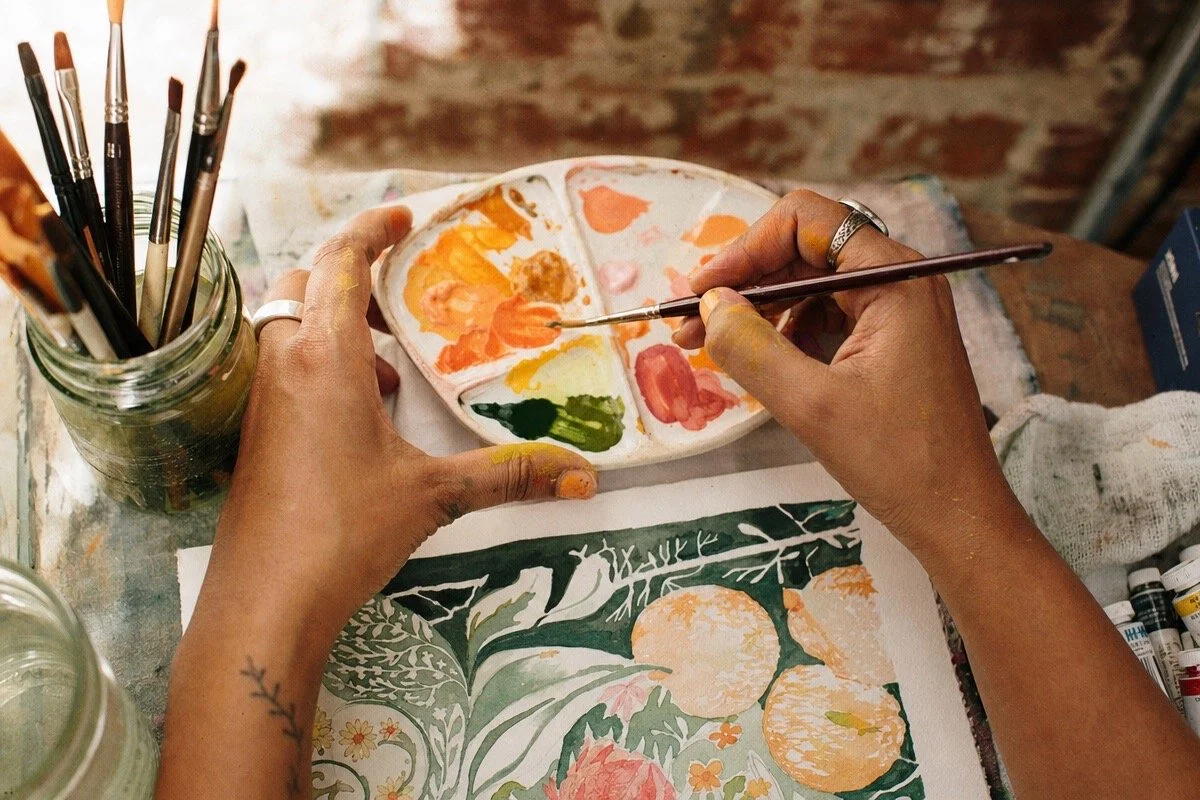
Therapy for artists is clinical mental health work — not coaching, not workshop, not critique — provided by licensed therapists who happen to come from creative backgrounds themselves. At Brooklyn North, that means art-trained clinicians (ATR, ATR-BC, LCAT) who move fluently between talk therapy and art therapy depending on what the week needs.
The "for artists" part isn't a niche marketing label. It's a practical fact: when your therapist understands the specific shape of an audition rejection, a gallery passover, a publisher's silence, or a flow state that won't return, you skip the explaining stage entirely. You don't have to translate what the work is, or defend why losing it would unmake something in you. The room is built around what creatives already know — that the work is more than a job, the process is the practice, and the things that hurt most are usually the things that meant the most.
Many artists arrive carrying performance anxiety, imposter syndrome, or creative trauma — and for those, we often draw on art therapy for anxiety, trauma-focused art therapy, or EMDR depending on what's underneath the block.
You went to therapy. You talked about your childhood, your relationships, your sleep. It helped, somewhat. But the part that wouldn't move was the part that lived in the work — the show that got cancelled, the manuscript that came back, the year you couldn't paint, the season you couldn't write. Talk therapy can map a story. It can struggle when the story is also the thing you do for a living.
For working creatives, distress doesn't sit cleanly in one bucket. The career is the identity. The body is the instrument. Rejection lands somatically, and the nervous system files it next to every other rejection going back to childhood. Flow state — the thing you used to be able to find — starts arriving less and less, then not at all. We work with that directly. Art therapy gives you a non-verbal channel for what won't translate, and EMDR for performance trauma (when it fits) addresses specific creative ruptures — the failed audition, the harmful collaborator, the show that broke you — at the level the body actually stored them.
In Can Music Make You Sick? (Gross & Musgrave, University of Westminster Press, 2020 — doi.org/10.16997/book43), a study of 2,211 musicians found 68.5% had experienced depression and 71.1% had experienced anxiety or panic attacks. The work isn't the cause — the conditions around the work usually are.
When the Practice You Built Around Becomes the Thing That Hurts
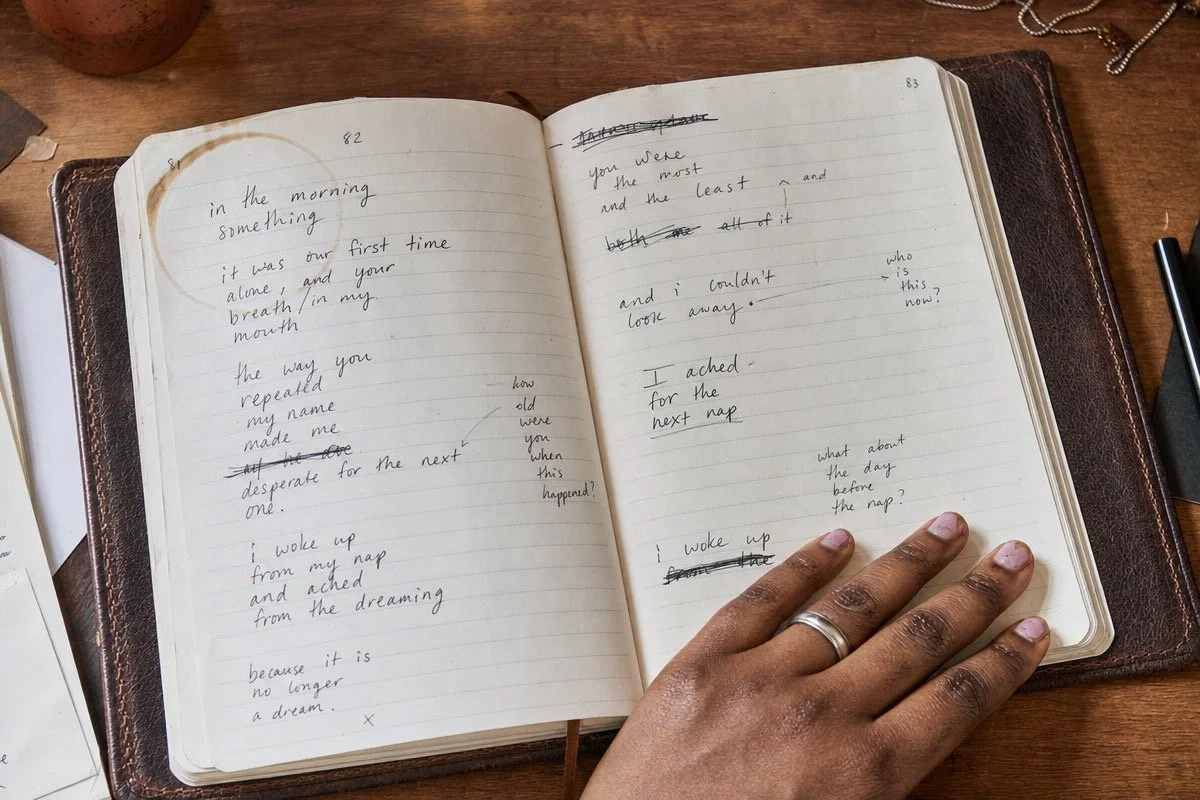
What We Work With
imposter syndrome that doesn't go away with credits
performance anxiety, audition nerves, stage fright
creative block that feels like grief
flow state that won't come back
the identity bleed — when "the work" and "me" stop being separable
rejection, criticism, comparison spirals
financial precarity and the nervous system that is deeply impacted by it
body image in performance, dance, and visual practice
burnout that other therapists keep calling "ambition"
Schedule a free 15-minute appointment
Imposter Syndrome, Creative Block, and Creative Burnout
Three names for the most common reasons artists end up here. Naming them doesn't fix them - if it did, you'd be fine by now.
Imposter syndrome in creatives doesn't respond to evidence. The credits accumulate and the feeling stays, because it was never about the resume - it usually runs back to something older about being seen, judged, and found out. Therapy for imposter syndrome means working at that level, not collecting affirmations. We trace where the fraud-feeling actually started, and EMDR can help when specific memories keep it wired in place.
Creative block feels like grief because it is grief - something that used to move stopped moving. Pushing harder is usually what built the block in the first place. Art therapy approaches it sideways: process over product, materials with no stakes attached, an hour where nothing you make has to be good. For most working artists that's the first place flow returns, because the conditions that block it everywhere else aren't there.
Creative burnout gets misread - by other therapists too - as ambition that needs better time management. It's not a scheduling problem. It's a nervous system that has been producing under precarity for years without a floor under it. We work somatically with what the grind actually did to your body, and honestly about the conditions that caused it. Burnout in a creative career is not a personal failure; it's a predictable injury. It's also treatable.
Why Art Therapy for Creatives, Specifically
Why talk therapy alone hits a ceiling. Talk therapy is good at a lot. For working creatives, it can hit a ceiling when the source of the distress is the work itself — because describing the work in words is already the day job. You can articulate exactly what's missing and still not feel it return.
Why art therapy moves flow. Flow state is a body experience before it's a cognitive one. It lives in the hands, the breath, the way attention stops checking itself. Art therapy works at that level on purpose. The medium you already think in is in the room — without an audience, without stakes, without the part of your brain already imagining the post. For most working artists and performers, it's the first place flow tends to come back, because the conditions that block it everywhere else aren't there. Process over product. Nothing to sell.
You don't have to choose between them. You can talk one session, work in clay the next, or weave them together — we'll figure it out with you, week to week.
Frequently Asked Questions about
Therapy for Artists and Creatives
-
No. Creatives at every level and across every discipline are welcome, and sometimes folks who don't identify as artists at all benefit most. It's about process, not product, and never about the credit list.
-
Yes. We're trained to read art made in session the same way other therapists read what's said out loud. All of us hold an art-therapy clinical license (ATR, ATR-BC, LCAT), and we come from creative backgrounds ourselves — we make things too, some of us still actively.
-
Both. You decide week to week. Some sessions are all talk. Some are mostly in the materials. Most are a mix, and you don't have to plan it in advance.
-
The honest answer is no, and the reason matters: art-in-session and art-in-your-practice do completely different jobs. One is clinical — a non-verbal channel for noticing what's happening inside you, with one audience (your therapist) and zero stakes. The other is creative practice — your professional or personal output, with all the stakes that come with it. Different muscles, different rooms.
-
Yes. We accept Healthfirst - one of very few practices of our kind in New York that do, because expanding access for working creatives is the reason Brooklyn North exists. For other plans, most of our work is out-of-network: we provide monthly superbills you submit to your insurer, and if your plan includes out-of-network mental health benefits (most PPO plans do), a portion of each session typically comes back to you. Coverage varies plan to plan - reach out via the consultation link below and we'll help you navigate the insurance maze before you start.
-
No. Writers, performers, musicians, designers, dancers, filmmakers, illustrators, comedians — the whole spread of creative work. The clinical approach stays the same; what changes is how it shows up in the room, depending on the medium you live in.