
Art Therapy for Depression
Depression flattens the color out of everything. You know you should want things. You know you used to. The signal that tells you what you like, what you need, what hurts, what makes tomorrow worth showing up to — that signal goes quiet. Sometimes it goes silent.
Art therapy alone typically isn't a cure for depression. We want to say that clearly up front. Paired with cognitive behavioral therapy, paired sometimes with medication, paired with a body that's finally getting enough sleep — it can be one of the only places the work stays warm enough to keep showing up to. That's the case we're going to make on this page.
What Art Therapy for Depression Actually Does
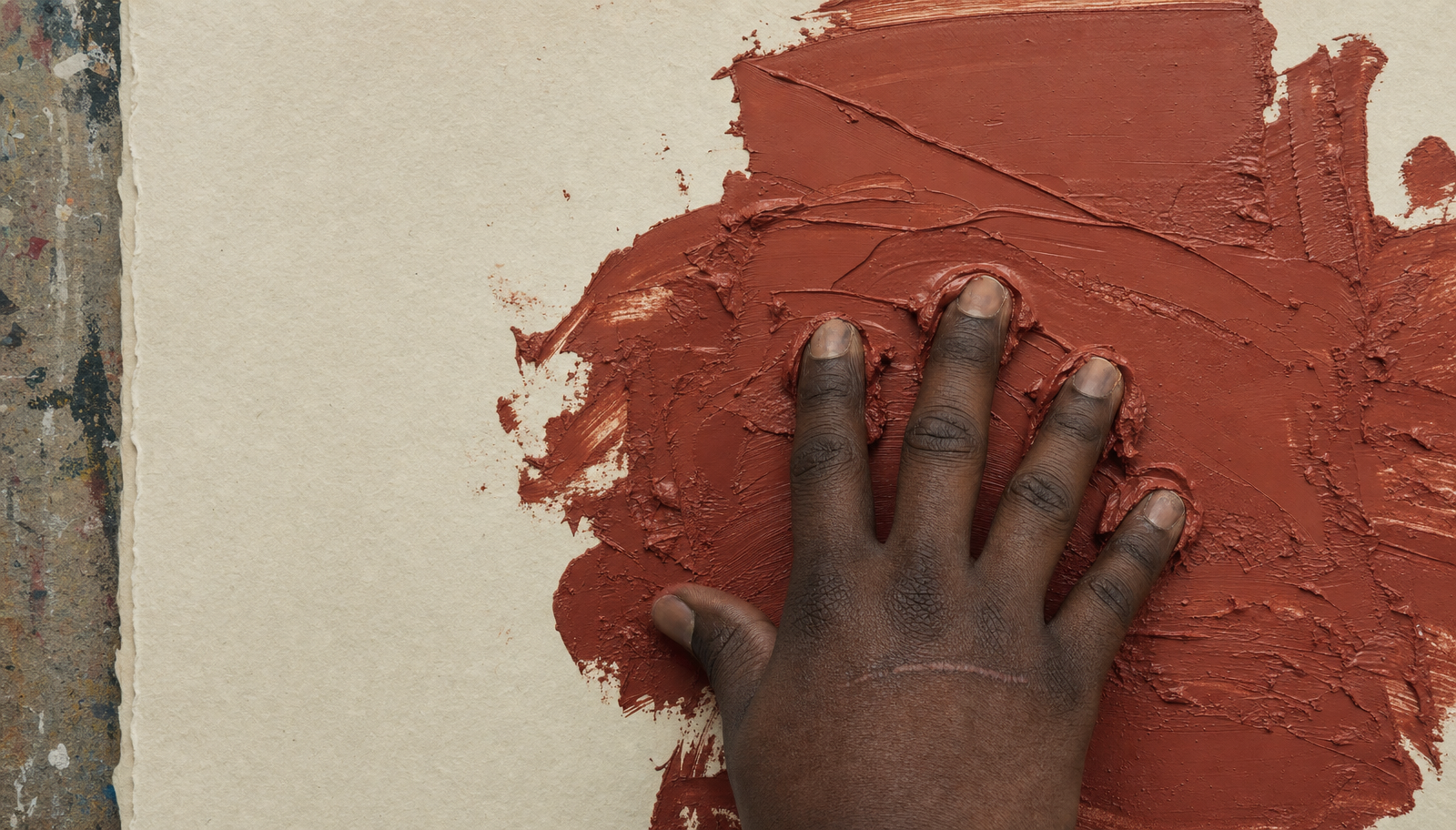
Depression disconnects you from your own signal. The line between what you feel and what you're aware of feeling gets thick — what used to come through fast and clear (what you want, what you need, what hurts) now arrives muffled or not at all. Art therapy for depression works at exactly that line. Making something — even a single mark on a single piece of paper — puts the signal back in your hands, literally. You see what color you chose. You see what shape your hand wanted to make. You see what you avoided. The information starts to come back, in a form you can't argue with as easily as you can argue with a thought.
Depression has a cognitive layer — the thoughts, the loops, the conclusions you've drawn about yourself that feel like facts. Cognitive behavioral therapy is one of the most studied tools for shifting that layer, and it works. We use it.
What CBT doesn't do, on its own, is feel warm. It can feel like homework. It can feel like one more system you're failing at. When you're already flat, "complete this thought record" is sometimes the last thing your body can do.
Pairing art therapy with CBT changes the texture of the work. The cognitive piece still gets done — we still name the thought, we still test it, we still notice the distortion. But it happens in a room with materials. The thought gets externalized onto paper. The reframe gets a color. The behavioral activation isn't "go for a walk" — it's "we're going to sit here and make one mark together, and that counts." Art therapy carries the warmth that CBT, on its own, sometimes can't.
The case for pairing isn't just clinical instinct. A randomized controlled trial by Blomdahl and colleagues at the University of Gothenburg studied manual-based art therapy added to treatment as usual for adults with moderate-to-severe depression. Participants who received the art therapy adjunctively showed significantly greater reductions in depressive symptoms and suicidal ideation, alongside improved self-esteem and earlier return to work, compared to standard depression treatment alone. A six-month follow-up published in Art Therapy (The Journal of the American Art Therapy Association) found the effects held over time. Art therapy isn't a replacement for evidence-based depression treatment. It's a way to make that treatment land.
This is our clearest reason for offering this work. We don't think depression responds to clinical-cold. We think it responds to clinical-warm.
Why We Pair It With CBT
The persistent low-grade kind — the one that's been there long enough that you've stopped thinking of it as separate from you. The "I've always been like this" kind. We don't believe you've always been like this.
The situational kind — grief, a breakup, a move, a job that ended, a parent who's sick. The kind with a clear cause, though naming the cause doesn't make it lift.
The postpartum kind — the depression that started somewhere around a birth, including ones that didn't happen the way you planned. Including miscarriages and losses.
The depression-with-trauma-underneath kind — the one where the flatness is actually a long shutdown response, where the depression is what your nervous system reached for to keep you safe. For this one we usually integrate trauma-focused art therapy and sometimes EMDR.
If your depression is severe, active suicidal ideation is part of your day, or substance use is currently primary, we may refer you to a higher level of care first and stay in touch with that team. Honesty about scope matters here.
The Kinds of Depression We See Most
Schedule a free 15-minute appointment
When Depression Sits on Top of Trauma
For a meaningful share of people who come in with depression, what's underneath is trauma — single event, long-term, or attachment-related. The flatness is a nervous system that's been holding too much for too long.
When that's part of the picture, the depression work and the trauma work happen together. We use the art therapy to keep the room warm enough to do the harder work. We use EMDR when reprocessing is what's called for. You can read more on our page on trauma-focused art therapy.
Frequently Asked Questions about
Art Therapy for Depression
-
No. Truly, no. The work is what happens between you and the material — what the piece looks like at the end is beside the point.
-
For some people, yes. For most of the people who come to us, no — and we'll say that honestly. We usually pair the work with cognitive behavioral therapy, with prescriber coordination if you're on medication, and sometimes with EMDR when trauma is in the picture. We'd rather under-promise than over-promise.
-
Yes, with your permission. We'll get a release of information from you and stay in regular contact.
-
That's the most common thing we hear. We start with directives that don't require energy — a single line, a color choice, a hand resting on a piece of clay. The session adjusts to what you have that day. You're not failing if you can't do more.
-
Quieter than you might expect. We don't push you to make a lot. We work alongside you. Sometimes the most useful thing that happens is that you stay in the room for forty-five minutes and notice you stayed.
-
Yes to all three. We adjust the work to fit. For the trauma-shaped version we typically integrate trauma-focused art therapy and sometimes EMDR.