
Reviewed and updated: June 2026
You've probably heard that art therapy helps — from a friend who swears by it, or on a list of things that are supposed to be good for anxiety, somewhere between cold plunges and gratitude apps. And maybe part of you thought: sure, but does it actually do anything?
Fair question. Here's what the research says — and what it means if you're deciding whether to try it.
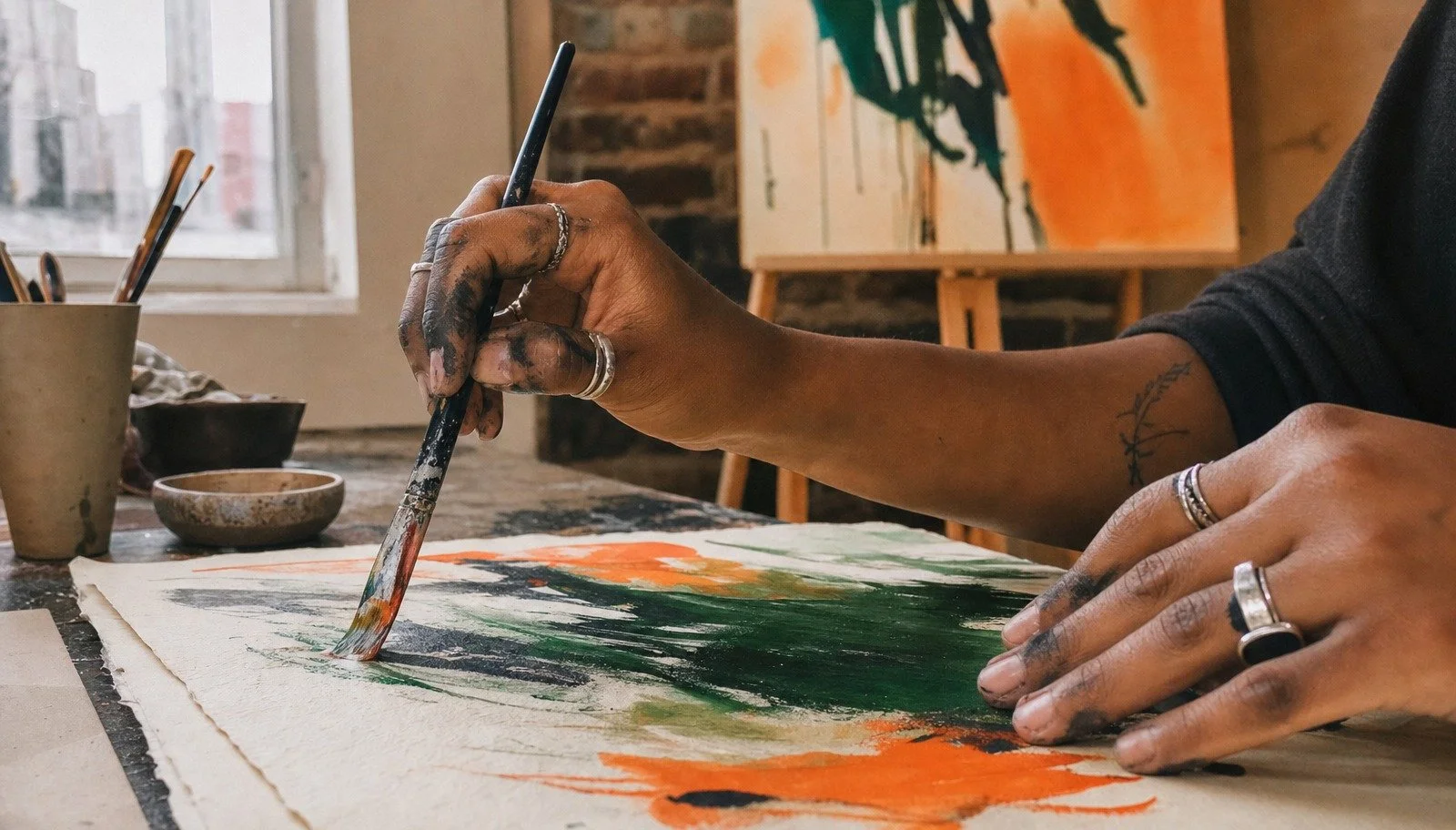
Does art therapy actually work?
Yes. The strongest recent evidence shows art therapy lowers anxiety, lifts depression, and eases stress across a wide range of people — and, crucially, the studies that show this measured structured work with a trained therapist, not making art alone at home. It's a real, evidence-based practice. Here's what that evidence looks like.
What the research shows: less anxiety, steadier mood
The pattern across the last few years is remarkably consistent.
A 2025 review in the Journal of Psychiatric and Mental Health Nursing pooled 35 randomized trials and more than 3,000 adults and found art therapy produced a large, significant drop in anxiety. For women navigating breast cancer, a 2024 review of 17 trials found clear reductions in both anxiety and depression — results that held even after the weaker studies were set aside. And in children and teens, a 2024 meta-analysis of controlled trials found art therapy eased depressive symptoms.
Single trials add the texture. In one randomized study, older women with major depression who added art therapy to their care came out measurably less depressed and less anxious than those who didn't. In an adolescent psychiatric unit, six years of records showed that when art therapy was available, young people needed far fewer restraints and sedatives — and rated it the most helpful group they had.
Notice the theme: across wildly different people — cancer wards, teenagers, grieving elders — the needle moves the same way. And in each case, the work happened with a therapist in the room. That's not incidental. The relationship is part of what makes it work, which is exactly why making art on your own, while genuinely good for you, isn't the same thing as art therapy.
What this means for you
You don't need to be good at art. None of these studies measured talent, and neither do we. If you can hold a pen, you can do this work. It might feel a little awkward at first — that's normal, and it passes once your hands get going.
The one thing the research keeps pointing to is the difference-maker: a trained therapist in the room with you. That's not the part you can shortcut, and it's the part we do.
The work, at Brooklyn North
What we offer is exactly what those studies measured: structured art therapy inside real clinical care — warmth on the surface, rigor underneath. A room with good light, materials already out, and someone across from you who gets it and makes things too.
You don't have to arrive with anything figured out, or call yourself creative. You just have to show up and be willing to get your hands a little messy while we do the real work together.
Book a first session — no pressure to make anything beautiful. That was never the point.
FAQ
-
For anxiety, depression, and stress, the research says yes — multiple large reviews of controlled trials point the same way, when the work is led by a trained therapist.
-
Yes. There are randomized trials and recent reviews pooling thousands of people, consistently showing lower anxiety and depression.
-
The strongest evidence is for anxiety, depression, and stress — including in cancer care, older adults, and teens. See art therapy for anxiety and art therapy for depression for the specifics.
-
No. Skill has nothing to do with it. The work lives in the doing and the noticing, not the result.
-
No. While making art is certainly good for you, art therapy is structured work with a trained therapist — and that relationship is the difference between art making that is therapeutic and art making that is clinically impactful.
