
EMDR Resourcing: The Grounding Tools You Build Before the Hard Part
If you have started EMDR, or are about to, you have probably heard the word resourcing. Maybe your therapist mentioned a safe place, or a container, and you nodded along while quietly wondering what any of it has to do with the memories you came to work on.
Resourcing is the part of EMDR where you build steadiness before processing anything. It is the tools, images, and practiced skills that keep you grounded when the work gets heavy. Nothing about it is filler. Reprocessing only works when there is somewhere solid to stand, and resourcing is how that ground gets built.
Here is what resourcing involves, the three core resources most therapists use, and what happens when visualizing does not come easily.
What Does Resourcing Mean in EMDR?
Resourcing in EMDR means building internal tools for steadiness before trauma reprocessing begins: a safe place you can return to in your mind, a container that holds what is not ready to be processed, and supportive figures you can call up when you need them. Clinicians sometimes call this resource development and installation, or RDI.
The purpose is simple. EMDR therapy asks your nervous system to revisit material it has spent years avoiding. Without resources, that can flood you. With them, you and your therapist have reliable ways to slow down, ground, and end every session steady, no matter what came up in the middle.
Resources are not a test you pass. They are equipment you keep for the whole of the work, and usually well beyond it.
Where Resourcing Sits: The Preparation Phase
Resourcing belongs to the preparation phase of EMDR, phase 2 of the eight-phase protocol. It comes after history-taking and before any memory is selected for reprocessing.
That placement is deliberate. In your first EMDR session, your therapist gathers your history and starts a map of what the work will target. Preparation is the bridge between knowing what the targets are and actually going toward them. Some people move through it in a session; others stay longer, and the longer stay is a clinical choice about safety, not slowness.
If your therapist is still resourcing with you three sessions in, nothing is behind schedule. The schedule is you.
Safe Place: Somewhere Your Body Can Return To
A safe place, sometimes called a calm place, is a scene you build in your mind that your body reliably responds to with settling. It might be real or invented: a stretch of beach, a grandmother's kitchen, a corner of a room that exists only for you.

You and your therapist build it in detail, because detail is what makes it work. What you see there, what you hear, what the air feels like. Then you practice returning to it, often with slow bilateral stimulation to strengthen the association, until the return becomes almost automatic.
The safe place is the resource you will use most. Between sessions it works as a way to downshift a spiraling evening. Inside sessions it is where you and your therapist go when the material gets too hot.
What Is the EMDR Container Exercise?
The container exercise is a resourcing technique where you imagine a container strong enough to hold whatever is not ready to be processed, so it stays put between sessions instead of following you home. It works roughly like this:
Picture a container that feels genuinely strong enough: a vault, a chest, a shipping container, anything your mind trusts.
Give it detail. The material, the weight, the lid, the lock. Vague containers leak.
Deliberately place what came up in session inside it: images, feelings, fragments.
Close it and notice that closed feels different from gone. The material is stored, not erased.
Agree with your therapist when the container gets opened next, so your mind knows the material will be returned to on purpose.
The container is not avoidance. Avoidance is what your nervous system has been doing alone for years. The container is a negotiated agreement with yourself about when the hard material gets attention, made with someone trained to keep that agreement with you.
Trusted People and Other Resources
Beyond the safe place and container, resourcing often includes calling up figures who steady you. A protector, someone in whose presence you feel safe. A nurturer, someone who is gentle with you. A wise figure, someone whose judgment you trust. They can be people from your life, people no longer living, characters, animals, or entirely imagined.
If it feels strange to lean on an imagined figure, notice that your nervous system does not draw a hard line between vividly imagined support and remembered support. What matters is the felt response: shoulders dropping, breath slowing. That response is real, and it is trainable.
What If You Cannot Visualize?
Some people cannot picture a beach on command, and for others, closing their eyes and going inward is exactly where the danger feels closest. If that is you, resourcing is not off the table. It just is not built through visualization alone.
Your therapist can anchor resources in other channels: a physical object you hold, a piece of music, a movement, a phrase. This is normal, it is common, and naming the difficulty out loud is itself part of the preparation work. You are not failing the exercise. The exercise adapts to you.
Making Resources Physical: The Art Therapy Overlap
In our practice, resourcing often moves from imagination to the table. A safe place does not have to stay behind your eyes: you can draw it, in color, on paper you can hold. A container does not have to be imagined: you can build one out of clay, with a lid that actually closes.
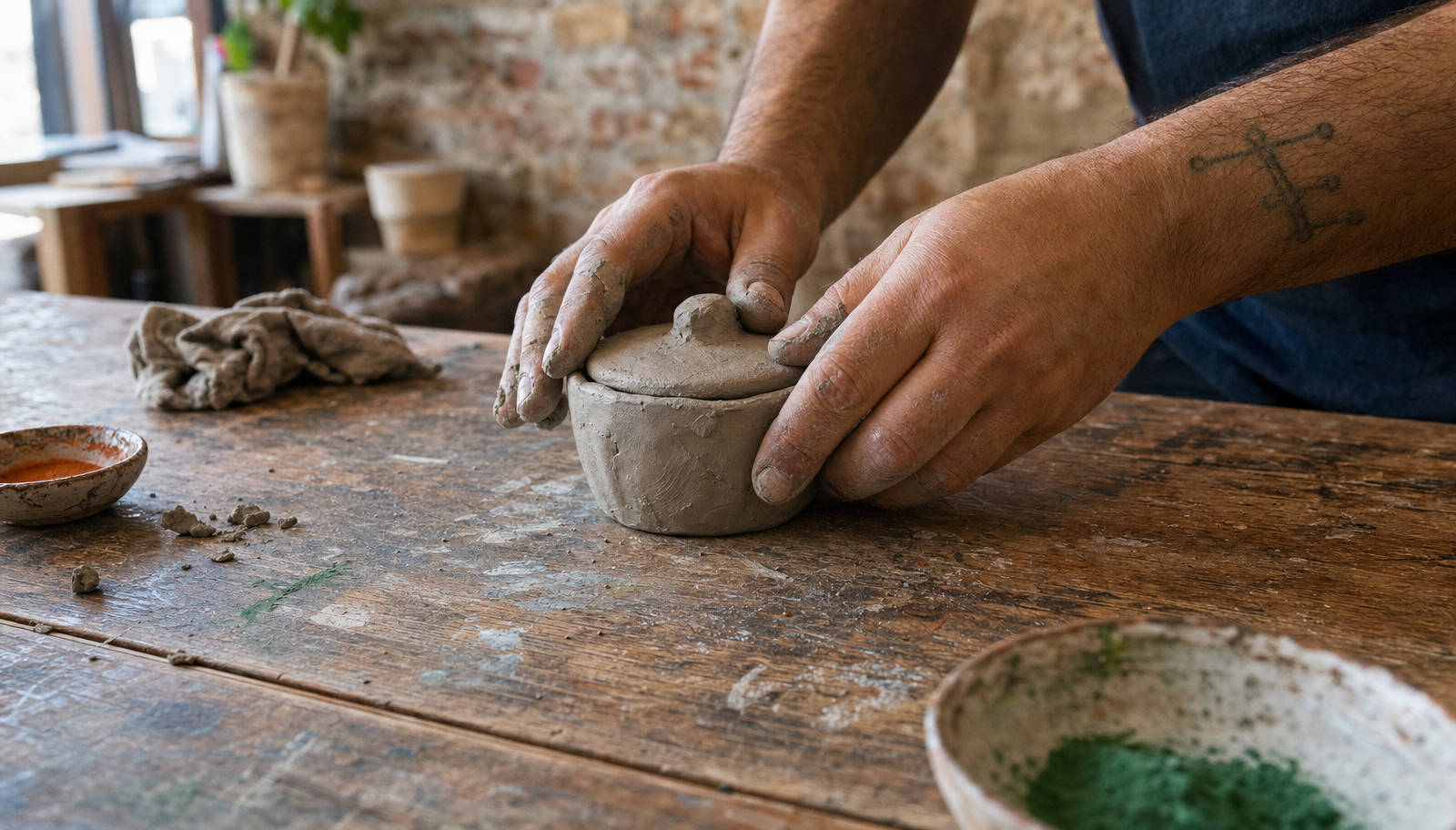
For many people this is where resourcing finally clicks. The image stops being an effortful mental exercise and becomes a thing that exists, that you made, that you can return to by looking at it. This physical-first way of working sits at the center of how we approach art therapy for trauma, and it is a large part of why art therapy and EMDR pair so naturally.
Here are the three core resources side by side:
| Resource | What it is | What it is for |
|---|---|---|
| Safe place | A detailed scene your body responds to with settling | Grounding in session and downshifting between sessions |
| Container | An imagined or built vessel that holds unfinished material | Ending sessions steady; keeping material from following you home |
| Support figures | Protector, nurturer, wise figure, real or imagined | Felt sense of not being alone with the work |
Not Everyone Needs Every Resource
Some clients arrive with years of grounding practice already in their body and move through preparation quickly. Others need the full toolkit. Most people are somewhere in between, and need different resources at different points in the work.
Resourcing is added support, not a gate you must pass through. Your therapist calibrates it to you: how much charge your history carries, how easily you dissociate, what you already know how to do. If you never use the container, nothing was wasted. It was there in case.
Why Resourcing Is Not a DIY Practice
You can absolutely practice your resources between sessions, and your therapist will encourage it. What we do not recommend is attempting EMDR itself, including deep trauma-focused resourcing, alone from videos or apps.
The reason is the same reason resourcing exists at all: trauma material is unpredictable, and the point of the preparation phase is having a trained person with you when something opens that was not supposed to open yet. Resources are built inside a relationship, and they work best there.
Frequently Asked Questions
What does resourcing mean in EMDR?
Resourcing means building internal grounding tools before trauma reprocessing begins: a safe place, a container, and supportive figures. It gives you and your therapist reliable ways to steady your nervous system during and between sessions.
Which phase of EMDR is resourcing?
Resourcing happens in the preparation phase, phase 2 of the eight-phase EMDR protocol. It follows history-taking and comes before any memory is selected and reprocessed.
What is the container exercise in EMDR?
The container exercise is imagining, in detail, a vessel strong enough to hold whatever is not ready to be processed. You place unfinished material inside it at the end of a session so it stays put until you and your therapist return to it deliberately.
What if I cannot visualize a safe place?
Then your resources get built through other channels: objects, music, movement, phrases, or something you physically make in session. Difficulty visualizing is common and does not stop EMDR from working.
Does everyone doing EMDR need resourcing?
Everyone passes through the preparation phase, but how much resourcing you need varies widely. Some people need one session of it; others build the full toolkit. Your therapist calibrates it to your history and your nervous system.
Can I use my resources between sessions?
Yes, and you should. The safe place in particular is designed for daily life: a practiced way to downshift when something activates you. The more you use a resource, the faster your body responds to it.
Building the Ground, Together
Resourcing can feel like a detour when what you want is to finally deal with the thing. It is not a detour. It is the part of the work that makes the rest of the work possible.
Three of our four therapists are EMDR-trained, and all of us build resources the way we build everything here: at your pace, and often with your hands. Book a free consultation if you want to talk about what starting would look like for you.
