
Types of Therapists: A Plain-English Guide to Who Does What
You finally decide to find a therapist, and the first thing the internet hands you is alphabet soup. LMHC, LCSW, PsyD, LCAT. Every profile looks warm, every bio says evidence-based, and none of them explain what the letters mean. That confusion is not a you problem. The field really is this cluttered, and it rarely explains itself before asking you to choose.
Here is the plain version, so you can stop decoding and start deciding.
The quick answer
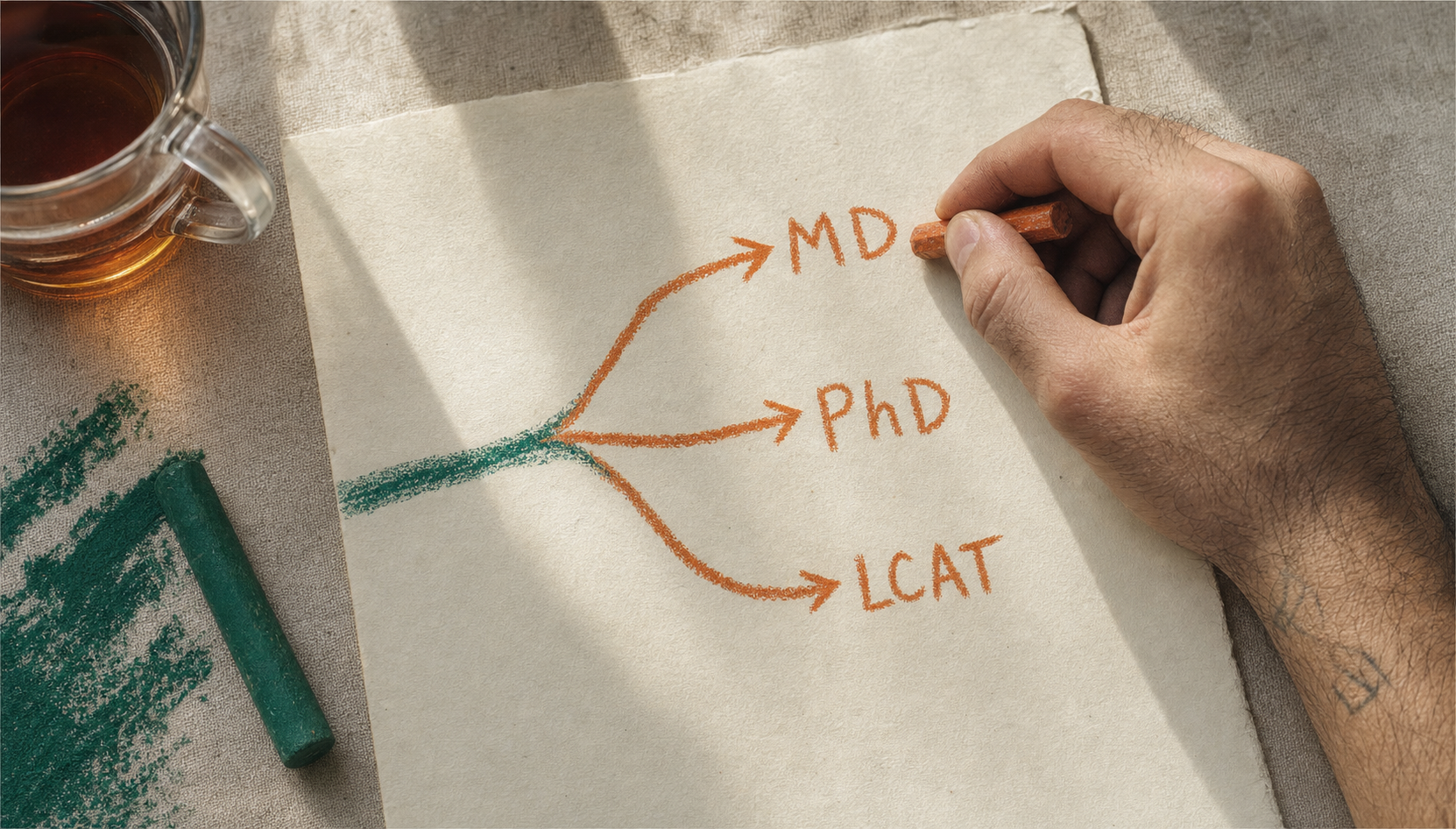
"Therapist" is an umbrella word, not a license. In New York, mental health care comes from three broad groups: psychiatrists (medical doctors who prescribe medication), psychologists (doctorate-level clinicians who focus on testing and talk therapy), and master's-level clinicians (LMHC, LCSW, LMFT, LCAT), who provide most of the weekly talk therapy that actually happens.
The short version: a comparison table
Everyone in this table is a licensed mental health professional. The differences are training, tools, and what they are legally allowed to do. Here is each one in more detail.
| Who | Degree | Can prescribe? | See them for |
|---|---|---|---|
| Psychiatrist | MD or DO (medical school + residency) | Yes | Medication, complex diagnoses |
| Psychologist | PhD or PsyD (doctorate) | No (in New York) | Psychological testing, talk therapy |
| LMHC | Master's in mental health counseling | No | Talk therapy |
| LCSW | Master's in social work + clinical hours | No | Talk therapy, help navigating systems |
| LMFT | Master's in marriage and family therapy | No | Couples and family work |
| LCAT | Master's in a creative arts therapy | No | Talk therapy through art, music, drama, or dance |
Psychiatrists: the medical doctors
A psychiatrist went to medical school, completed a psychiatry residency, and holds an MD or DO. They are the only people on this list who can prescribe medication, and that is usually what you see them for. Most psychiatric appointments today are focused medication check-ins, often 15 to 30 minutes, rather than weekly hour-long conversations.
A common setup in New York: you see a psychiatrist for medication and a therapist for the weekly work. The two are complements, not competitors, and a good psychiatrist will say so.
Psychologists: doctorates and testing
A psychologist holds a doctorate, either a PhD or a PsyD, which means five to seven years of graduate training and research. In New York they cannot prescribe medication. What sets them apart is psychological assessment: if you need formal testing for ADHD, autism, learning differences, or a complicated diagnostic picture, a psychologist is the person qualified to run it.
Many psychologists also practice talk therapy, and do it well. But if testing is not on your list, a doctorate is not a requirement for good therapy, and you should not feel you are settling by seeing someone without one.
Master's-level clinicians: where most therapy happens
The majority of talk therapy in this city is done by clinicians with a master's degree, a few thousand hours of supervised practice, and a New York State license. The license tells you the path they took, and it hints at how they think.
LMHC: licensed mental health counselor.
Trained specifically in counseling and psychotherapy. The most straightforward answer to "I want a therapist to talk to every week."
LCSW: licensed clinical social worker.
Trained in psychotherapy and in the systems around you: housing, insurance, family court, schools. Social workers tend to see your life in context, not just your symptoms.
LMFT: licensed marriage and family therapist.
Trained to treat relationships as the client. If the problem lives between people rather than inside one person, this is the specialty built for it.
LCAT: licensed creative arts therapist.
Trained in both verbal psychotherapy and how to combine that with a creative practice. This one is ours, so it gets its own section.
What is an LCAT?
LCAT stands for licensed creative arts therapist. It is a New York State license, and New York is one of the few states that has one. Getting it requires a master's degree in a creative arts therapy (art, music, drama, or dance/movement), around 1,500 hours of supervised clinical work, and a state-approved exam. It sits at the same level as the LMHC and LCSW licenses: same tier of clinical training, same legal authority to practice psychotherapy.
The difference is the tool. An LCAT works with what your hands make as well as what you say. Some things you carry do not arrive in sentences. They surface in a charcoal mark, in the pressure you put on the paper, in what you make when nobody is grading it. That is somatic work: what you already know, in your hands.
Art therapy can sound less serious than "regular" therapy. It is not. It is psychotherapy with an extra channel, practiced under a state clinical license.
Therapist vs psychologist: which one do you need?
This is the comparison people search for most, and the honest answer is short:
You need a psychologist if you want formal psychological testing or assessment.
You need a psychiatrist if medication is on the table.
For weekly talk therapy, a master's-level clinician is not the budget option. It is the standard of care, and decades of outcome research say the strongest predictor of therapy working is not the clinician's degree. It is the quality of the relationship between you.
So the real question is rarely "therapist or psychologist." It is "who do I trust enough to actually talk to?"
Where creative arts therapists fit: ATR, ATR-BC, and LCAT
Art therapist credentials come in two layers, and it is worth knowing both when you read a bio:
ATR is a national registration from the Art Therapy Credentials Board. It confirms graduate training in art therapy plus supervised clinical experience. ATR-BC means the therapist also passed the national board-certification exam.
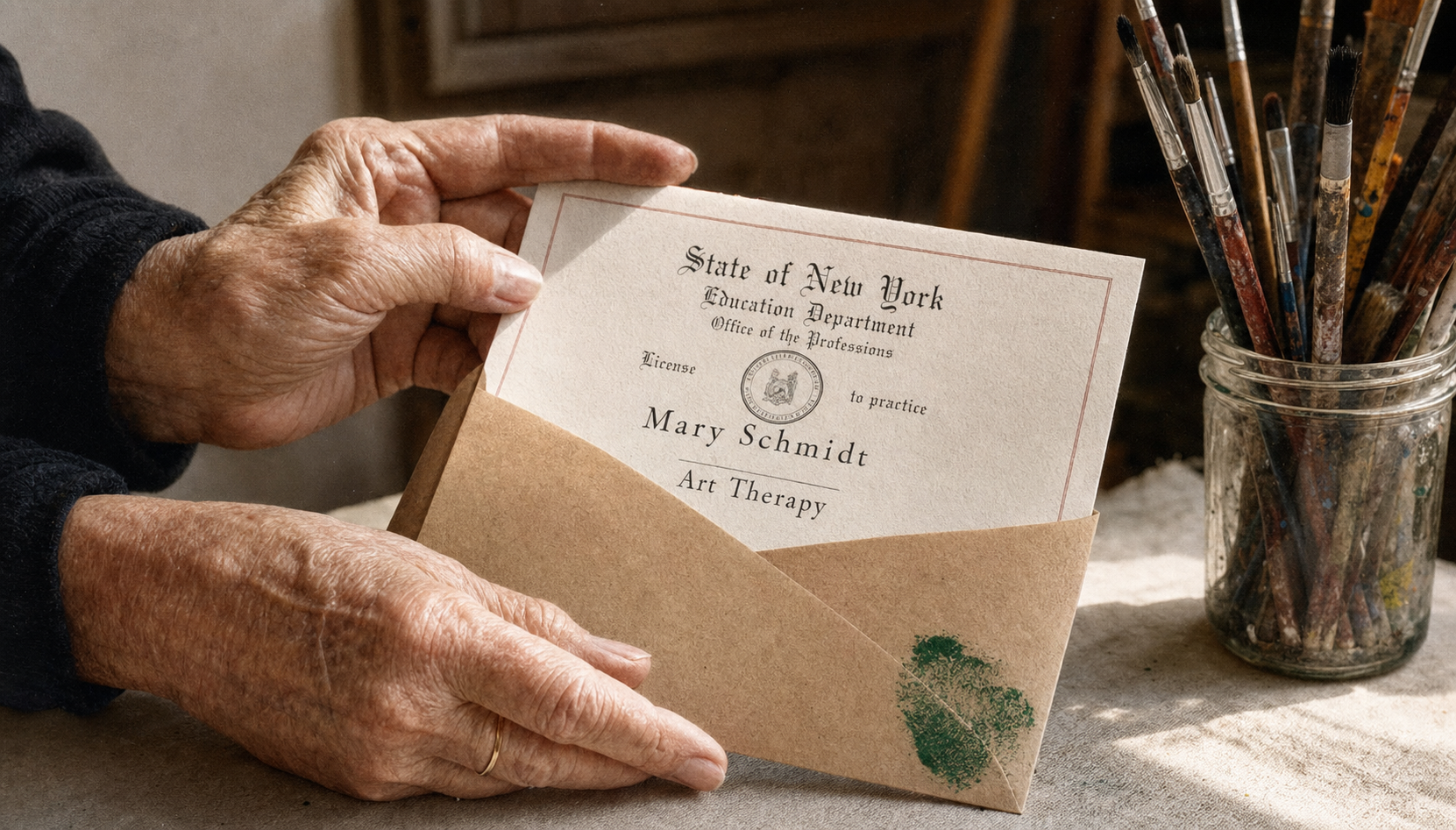
LCAT is the New York State license: the legal credential to practice psychotherapy here.
A creative arts therapist practicing in New York should generally hold both the national credential and the state license. Ours do. You can read each therapist's training and focus on our team page.
How to choose without losing a weekend
Start with the problem, not the title:
Medication questions: psychiatrist.
Testing or assessment: psychologist.
Weekly therapy for anxiety, depression, trauma, or a life that stopped fitting: any master's-level clinician whose focus matches yours.
Drawn to working with your hands, or tired of talking in circles: a creative arts therapist.
Then meet them. Most practices, including ours, offer a free consultation. Therapy is hard, and starting it is the hardest part. The right fit makes both survivable. If you want to find out whether art therapy is that fit, reach out and we will figure it out with you.

FAQ
What is the difference between a therapist and a psychologist?
"Therapist" is an umbrella term for licensed clinicians who practice psychotherapy, most of whom hold master's degrees. A psychologist holds a doctorate (PhD or PsyD) and can run formal psychological testing. For weekly talk therapy, both are qualified; for assessment, you want the psychologist.
What does LCAT stand for?
Licensed creative arts therapist. It is a New York State clinical license requiring a master's degree in a creative arts therapy, supervised clinical hours, and an exam. It carries the same legal authority to practice psychotherapy as an LMHC or LCSW.
Can a therapist prescribe medication?
No. In New York, only medical providers such as psychiatrists and psychiatric nurse practitioners prescribe. Therapists and psychiatrists often work in parallel: one handles the medication, the other the weekly work.
Is an art therapist a "real" therapist?
Yes. In New York, a licensed art therapist (LCAT) has master's-level clinical training and a state license to practice psychotherapy. Art therapy can feel weird at first. It is still therapy, and both are worth it.
What is the ATR-BC?
A national credential from the Art Therapy Credentials Board. ATR confirms graduate training and supervised experience in art therapy; the BC means board certified, earned by passing a national exam. In New York it usually sits alongside the LCAT license.
Do I need a referral to see a therapist in New York?
No. You can contact a therapist directly, including us. Some insurance plans want a referral for reimbursement, so check your plan if you are using out-of-network benefits.
